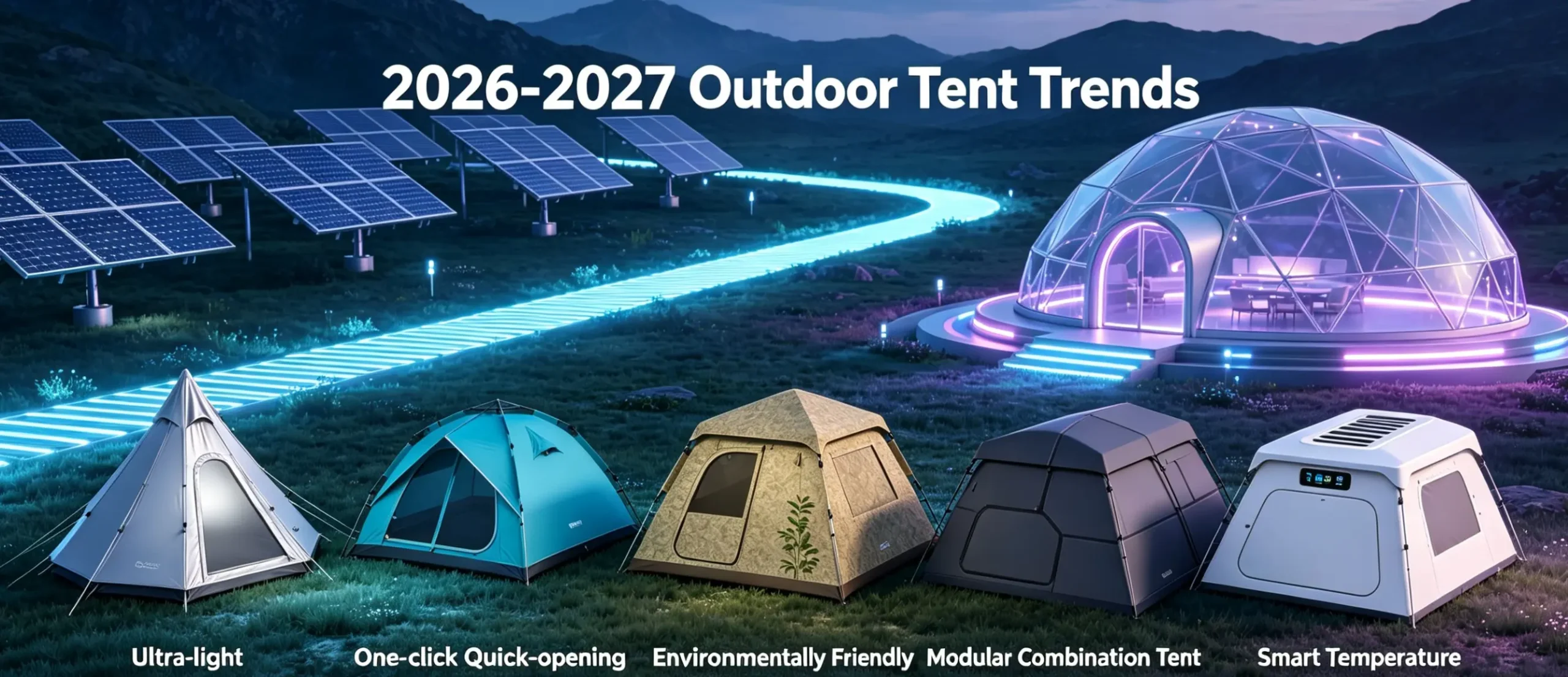
The global outdoor gear landscape is undergoing a rapid transformation. As we look toward the 2026-2027 seasons, the market is no longer satisfied with basic functionality. Today’s consumers—driven by social media, environmental consciousness, and a thirst for high-tech convenience—are demanding smarter, lighter, and more versatile shelters. For wholesalers and brand owners, staying ahead of these curves is the difference between leading the market and falling into price-war fatigue. Here are the five pivotal trends that will define the next two years of the tent industry.
1. The "Sub-1kg" Ultralight Revolution
Technical Focus: Silnylon and DyneemaComposite Fabrics (DCF).
Content: The backpacking community is obsessed with "base weight." We are seeing sub-1kg (2.2 lbs) tents move from niche luxury to mainstream demand. By utilizing 10D/15D high-tenacity Silnylon and carbon fiber poles, manufacturers can provide extreme durability without the bulk.
Commercial Value: These high-performance products command premium price points and attract the "hardcore" enthusiast segment who value technical specs over all else.
2. Instant-Pitch Hydraulic & Inflatable Tech
Technical Focus: One-second hydraulic deployment and high-pressure TPU air beams.
Content: Time is the new luxury. For family campers and "live-stream" camping influencers, the hassle of traditional poles is a barrier. Improved hydraulic systems and multi-chamber air beams allow for near-instant setup, making outdoor stays more accessible for beginners.
Commercial Value: Ideal for the booming rental market and leisure camping retailers where "ease of use" is the primary selling point.
3. Eco-Sustainability: The "Green" Mandate
Technical Focus: GRS-certified recycled polyester and PFC-free DWR coatings.
Content: Environmental regulations in European and North American markets are tightening. Using recycled materials is no longer an option—it’s a prerequisite. PFC-free water repellent coatings ensure that no harmful chemicals leach into the wilderness during rainfall.
Commercial Value: Products with "Eco-Certified" labels bypass trade barriers and resonate deeply with the growing Gen-Z outdoor demographic.
4. Modular & Social Tent Systems
Technical Focus: Zipper-linked units and tunnel connectors.
Content: Camping is becoming more social. Modular systems allow individual tents to connect to a central "hub" or living zone. This is perfect for music festivals, group travel, and large families who want a balance between private sleeping quarters and communal social space.
Commercial Value: This creates an "ecosystem" for wholesalers—customers don't just buy one tent; they buy a suite of compatible units over time.
5. Smart Climate & Anti-Condensation Design
Technical Focus: Integrated anti-condensation ducts and adjustable high-low vents.
Content: Overnight comfort is often ruined by condensation. 2026 designs feature advanced airflow engineering, using heat-gradient vents that naturally draw moisture out while retaining warmth. Some high-end models even integrate solar-ready ports for internal LED lighting or fans.
Commercial Value: Solving the "wet tent" problem is a massive pain-point solution that drives high customer satisfaction and positive online reviews.