1. Polyester: The Cost-Effective Choice for UV Resistance and Shape Retention
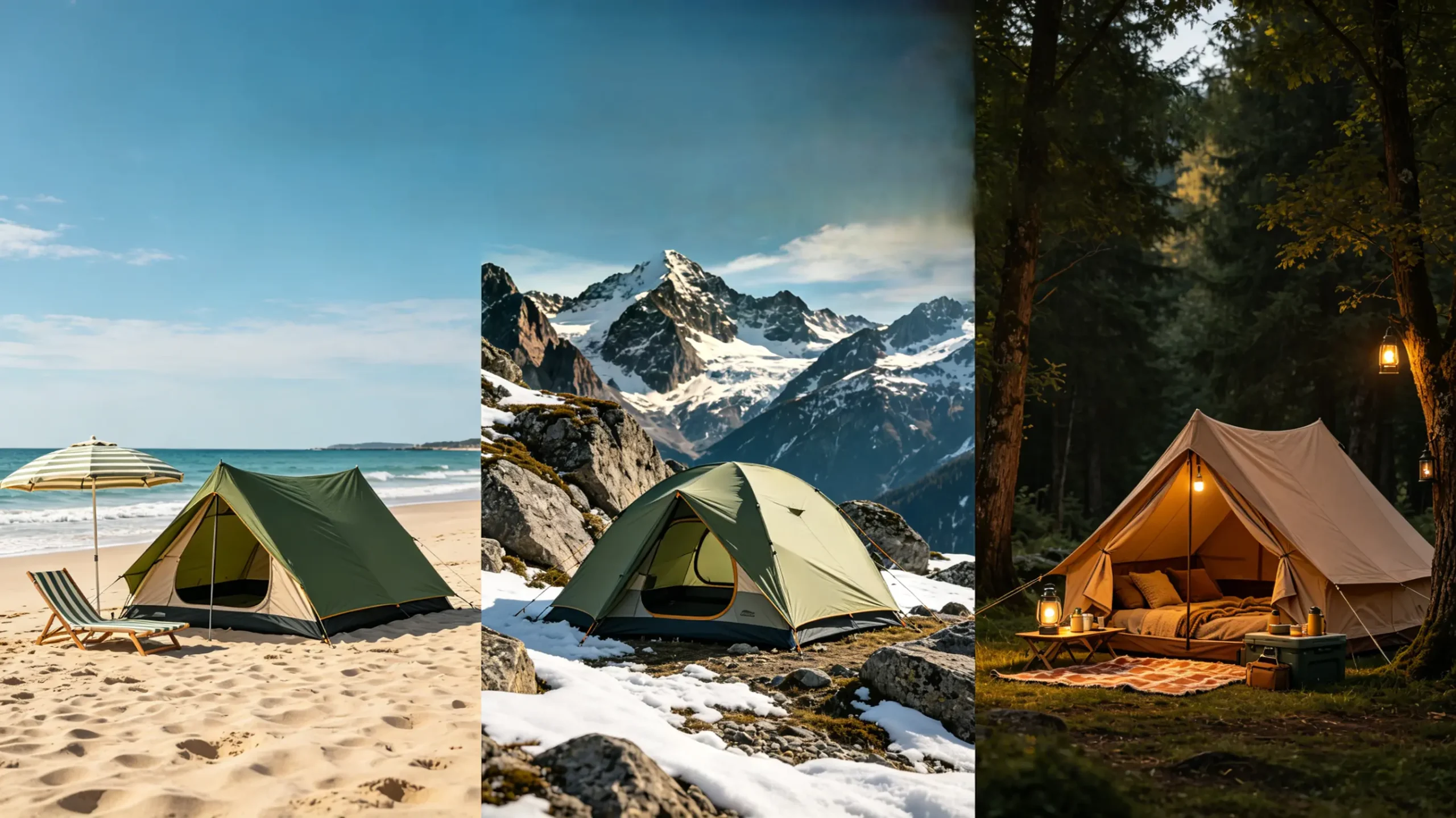
Polyester tent fabric excels in UV resistance, maintaining its shape without sagging under prolonged sunlight. Its polyester fiber structure naturally withstands UV radiation, making it widely used for summer camping and beach tents. With PU coating, polyester achieves 1500mm-3000mm waterproof ratings – sufficient for normal rainfall. Wholesalers should note: low-grade polyester can feel “cold and wet”; recommend upgraded versions with breathable waterproof coatings.
2. Nylon: The Professional Choice for Extreme Lightness and Tear Strength
Nylon is about 30% lighter than polyester with higher tear strength, making it the preferred material for mountaineering and ultralight backpacking tents. Nylon fabrics are typically silicone-treated (Silnylon) or PU-coated, achieving 3000mm-5000mm waterproof ratings. However, its drawbacks include high elongation when wet (10-15% stretch) and weaker UV resistance than polyester. Wholesalers supplying nylon tents should clearly advise: “Ideal for dry, high-altitude environments; avoid long-term direct sun exposure.”
3. Cotton: The Luxurious Choice for Breathability and Static Camping
Cotton tents (or Polycotton blends) offer exceptional breathability, significantly reducing interior condensation and keeping cool in summer. Their natural fiber structure “breathes,” making them suitable for long-term stationary camping, glamping, or jungle camping. Drawbacks include heavy weight, slow drying, and mold susceptibility. Wholesalers can position cotton tents as premium lines with wooden interiors, pre-set beds, and accessories – targeting resort and campsite buyers, often achieving 30%+ higher margins than synthetic tents.